








Groups Demand End to Public Financing for Incineration at World Bank Annual Meeting
FOR IMMEDIATE RELEASE: 13 October, 2026
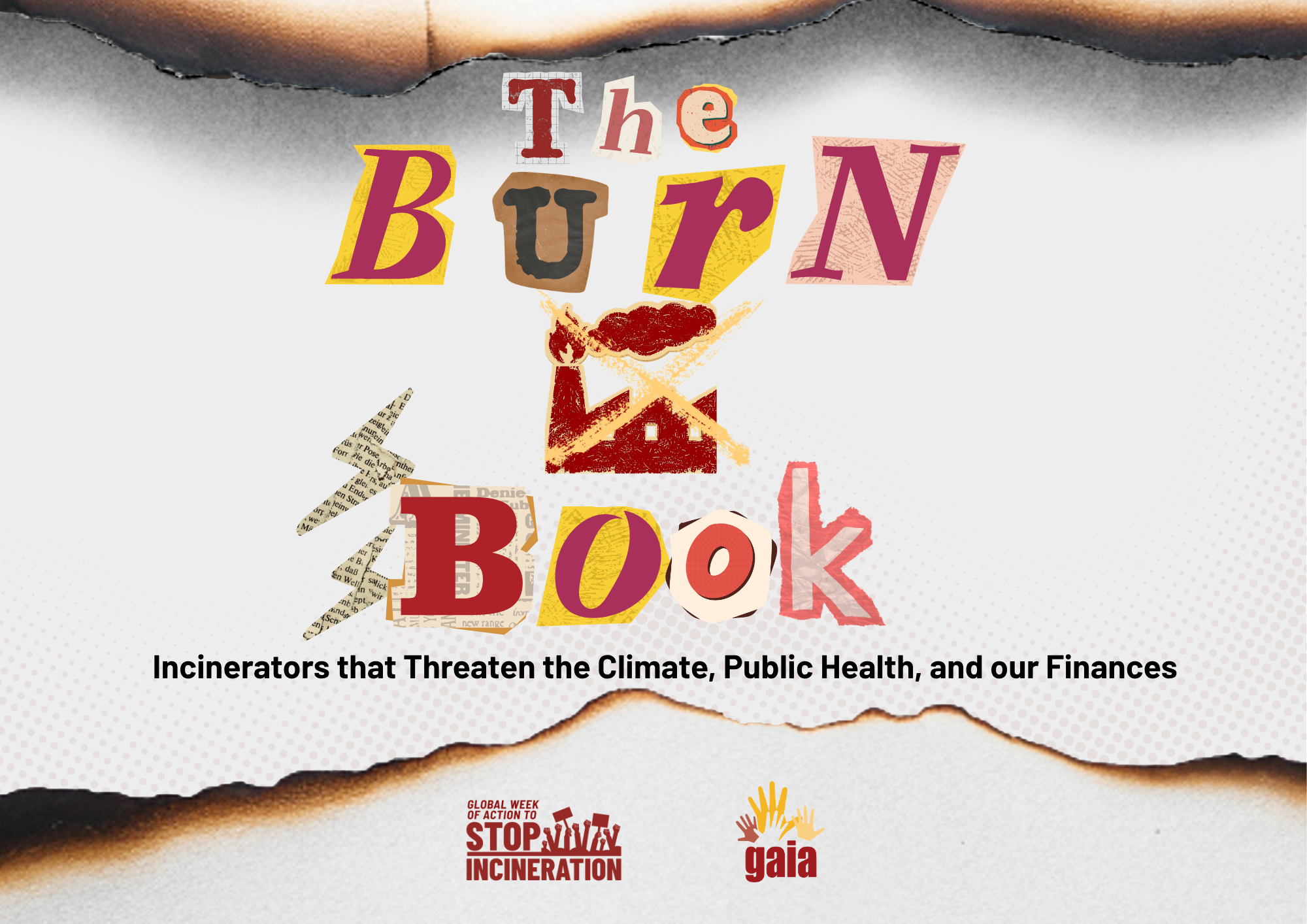
Today, the Global Alliance for Incinerator Alternatives’ (GAIA) has released a report entitled, The Burn Book: Incinerators that Threaten the Climate, Public Health, and our Finances. The publication analyzed data from twenty incinerators and incinerator proposals worldwide, focusing on public debt and subsidies, climate and air pollution, toxic byproducts, and other common issues surrounding the industry– identifying key patterns that emerged regardless of regional contexts. The release of this publication is timed with a Global Week of Action to Stop Incineration October 13-16, with solidarity events planned around the world.
“As these examples show, incinerators or so-called ‘waste-to-energy’ plants don’t magically burn away our waste problems– they create new ones,” states Marcel Howard, GAIA Special Projects Lead and author of the report.
“Not only do they burden communities with toxic air and climate emissions and crippling public debt, but they also need massive volumes of waste to stay in operation, undermining municipal efforts to conserve precious natural resources. With our escalating climate crisis and overshoot of key planetary boundaries, we have no more time to waste on keeping this polluting industry afloat.”
The report surfaces several key trends:
- “Waste-to-energy” incinerators turn waste into toxic air and ash pollution. Based on public data, these incinerators alone produced at least 1.7 million tons of toxic ash per year– the equivalent in weight to 230 Eiffel Towers. There is also significant documentation of air pollutants that threaten human health– including carbon monoxide, nitrous oxide, dioxin, and furans. Many communities surrounding these plants complained of odors, respiratory issues, and ground contamination.
- These facilities have a large climate footprint. Despite studies showing that waste-to-energy incineration produces more climate emissions than any other power source, many of the incinerators on the list do not monitor or publicly disclose their emissions levels. The eleven that did have available data release a cumulative 5.5 million metric tons of CO2e per year, the equivalent of 1.3 million passenger cars.
- “Waste-to-energy” is a waste of money. The twenty incinerators profiled have racked up nearly $7 billion of investments to date, with a portion of that directly from taxpayers in the form of government subsidies and municipal borrowing. In some cases municipalities are on the hook for millions of dollars in debt that stretches for decades. Waste incinerators are the most expensive form of waste management.
- Burning waste undermines waste reduction. Once built, “waste-to-energy” incinerators require large volumes of waste to stay in operation, and many municipalities have “put-or-pay” contracts that disincentivize waste reduction. Much of the material burned in these incinerators could have been composted, recycled, or avoided altogether.
As the World Bank convenes its annual meetings in Bangkok, Thailand, communities across the Global South are demanding an end to public financing for incineration disguised as climate action. GAIA Asia Pacific’s Citizens’ Atlas on False Climate and Circularity Solutions found that 42 of 59 World Bank Group projects assessed in Asia Pacific supported incineration technologies between 2015 and 2026. From the proposed Smokey Mountain incinerator in Manila to 12 industrial waste-to-energy plants backed by ADB and AIIB in Thailand, these projects threaten communities, waste workers’ livelihoods, and environmental justice.
Statements from GAIA members whose incinerator campaigns are featured in the Burn Book:
Elisah Pals, Founder and Board Member, Zero Waste Nederland:
“Incineration is the wrong direction, including for a country like the Netherlands. We already struggle with air, water and land pollution, yet we continue to import waste to keep incinerators running. Even when we succeed in producing less waste, we can end up facing penalties. Lock-in problems are real here. That is the world turned upside down. We need prevention, not more reasons to burn.”
Karen Wirsig, Senior Plastics Program Manager, Environmental Defence Canada:
“Burning waste is dirty and expensive and often ends up in communities that have the least power to say no. Governments that want to address a growing waste problem need to focus on waste reduction, not toxic fairy tales.”
Alejandra Torres, Assistant Director of Advocacy & Organizing, Ironbound Community Corporation:
“Burning trash is not the right answer for managing waste. The incinerator in the Ironbound, Newark, NJ, has surpassed its lifetime and is getting dirtier and costlier. We are inspired by communities who have managed to advance zero waste practices and jobs, shut down incinerators, and ensure that clean energy subsidies go to real clean energy. A better world is possible!”
Jane Bremmer, Chair, Toxics Free Australia:
“Australia has a unique opportunity to leapfrog ahead of the mistakes of Europe, the UK and the US on waste management and disposal by choosing a Zero Waste City model instead of incinerators. No community deserves to carry the adverse health and environmental burden of incinerating another town or industry’s waste. While there are safer, more effective ways to manage any country’s residual waste, incineration remains indefensible.”
Rossano Ercolini, President, Zero Waste Italy:
“Incineration is the polluting past. It destroys resources to be shared with the future. Incineration is against the circular economy and promotes a linear throw-away model.”
Victor Argentino, Instituto Polis:
“Pushed in cities as a ‘quick fix’ over waste picker inclusion and separate waste collection, incinerators or WTE in Brazil reinforces environmental racism by being placed in low-income, peripheral areas.”
Jai Muhammad, Campaigner, WALHI East Java:
“In order for us to live a good life, we must breathe clean air. And in order to breathe clean air, incinerators must be shut down!”
Sue Maxwell, Chair, Zero Waste BC:
“Incineration is blocking action on zero waste as it is so expensive and locks communities into pollution and wasting resources.”
Press contacts:
Claire Arkin, Global Communications Lead, GAIA
claire@no-burn.org | +1 510-604-7833
Note to Editor:
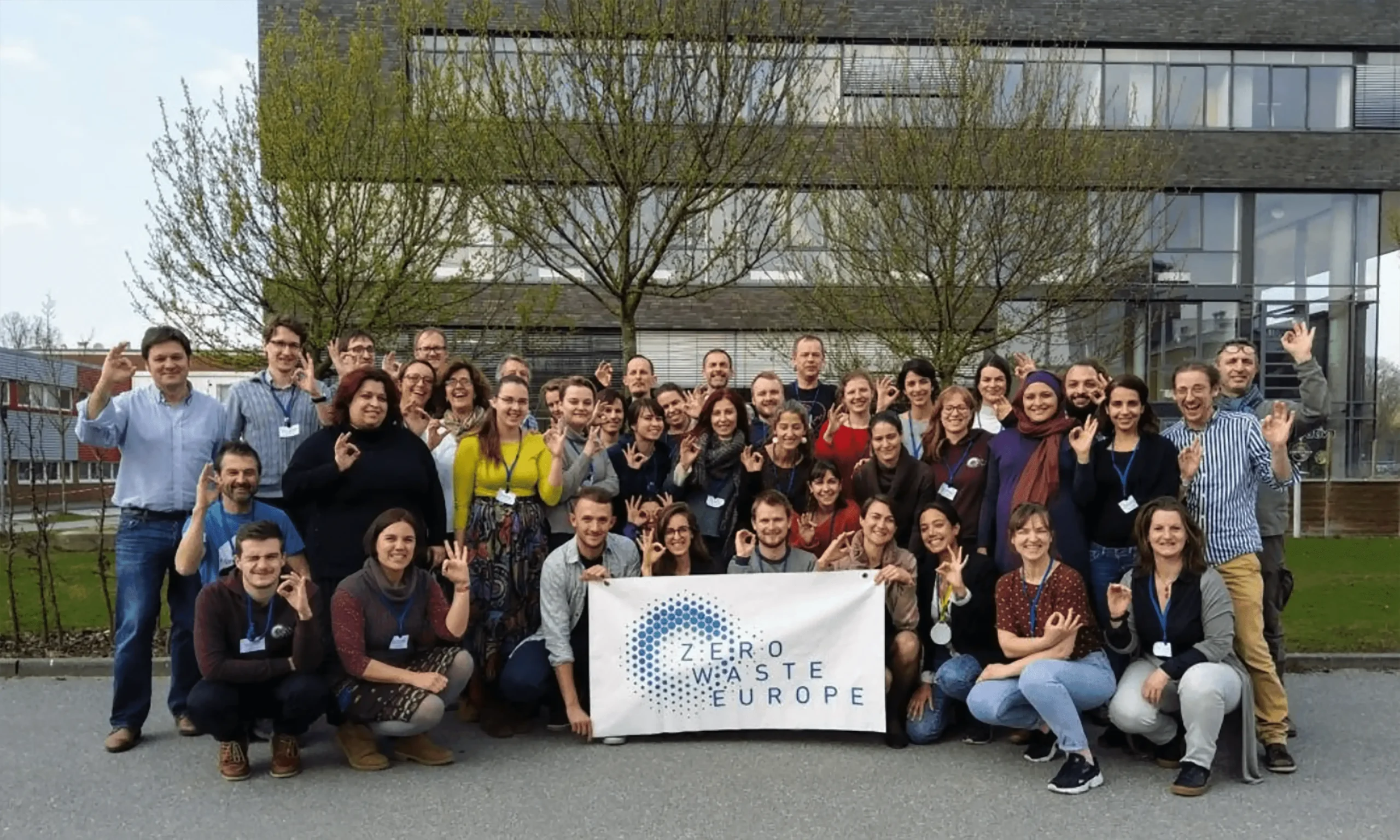
- Today, Zero Waste Europe has released a report, Incineration overcapacity in Europe: 2026 Data Update, which finds that the region’s waste-burning capacity is misaligned with its current waste generation and reduction goals.
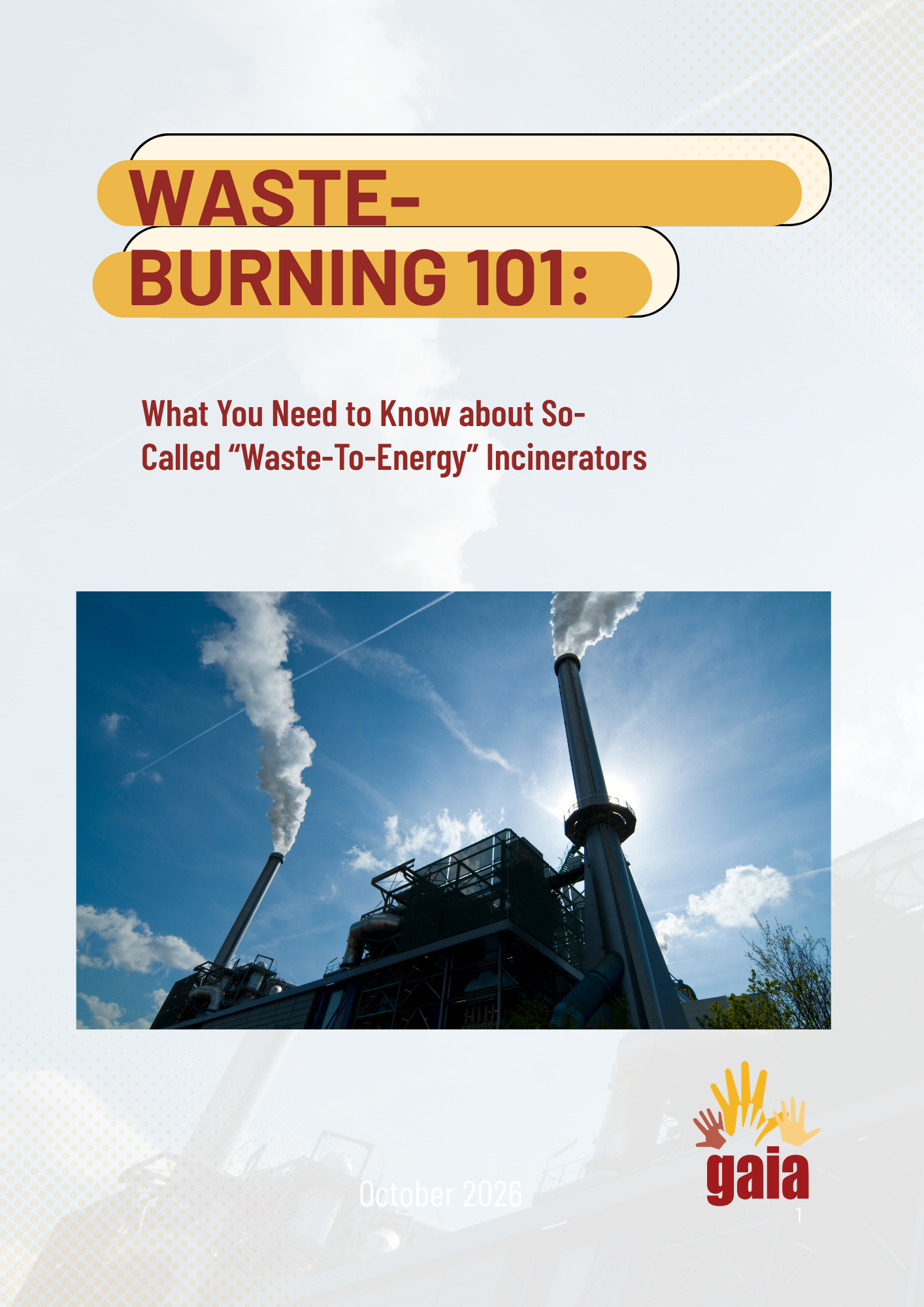
- GAIA has released Waste-Burning 101: What You Need to Know about So-Called “Waste-to-Energy” Incinerators, which provides a broad overview of the latest research around the harms associated with waste incineration.
- Throughout the week, GAIA and its members will be hosting virtual events in a Global Action Lab, an opportunity to hear from GAIA members first-hand about how waste incineration is impacting their communities.
###
GAIA is a worldwide alliance of more than 1,000 grassroots groups, non-governmental organizations, and individuals in over 100 countries. With our work we aim to catalyze a global shift towards environmental justice by strengthening grassroots social movements that advance solutions to waste and pollution. We envision a just, zero waste world built on respect for ecological limits and community rights, where people are free from the burden of toxic pollution, and resources are sustainably conserved, not burned or dumped.